Clogged drain: one slow drain or the whole house?
Drain cleaning means clearing a blockage from a drain line so waste water flows freely again. The first question is always where the blockage sits, because that decides both the tool and the urgency. When several fixtures back up together, main drain cleaning clears the line that carries the whole house to the sewer.
If only one fixture is slow, the clog is usually in that fixture's trap or branch line. Hair in a tub drain and grease in a kitchen line are the usual culprits.
If several fixtures back up at once, or a toilet gurgles when the washer drains, the blockage is in the main line. That is an emergency, because every drop of water used in the house has nowhere to go but back up through the lowest drain.
Emergency drain cleaning when water is backing up
Water rising in a tub when the toilet flushes, or sewage coming up through a floor drain, points to a blocked main line. That is an emergency drain call, not a plunger job.
Stop running water anywhere in the house. Do not pour chemical cleaner into a backed up drain, because it makes the clearing work less safe for everyone.
Our emergency line is open 24/7. The plumber clears the blockage, confirms flow and tells you whether a camera check is worth doing before it happens again.
Sewage coming up? Do this first
These steps limit the mess while a plumber is on the way.
- Stop using water everywhere in the house. That includes flushing, the dishwasher and the washing machine.
- Keep kids and pets away from the backup. Sewage carries bacteria.
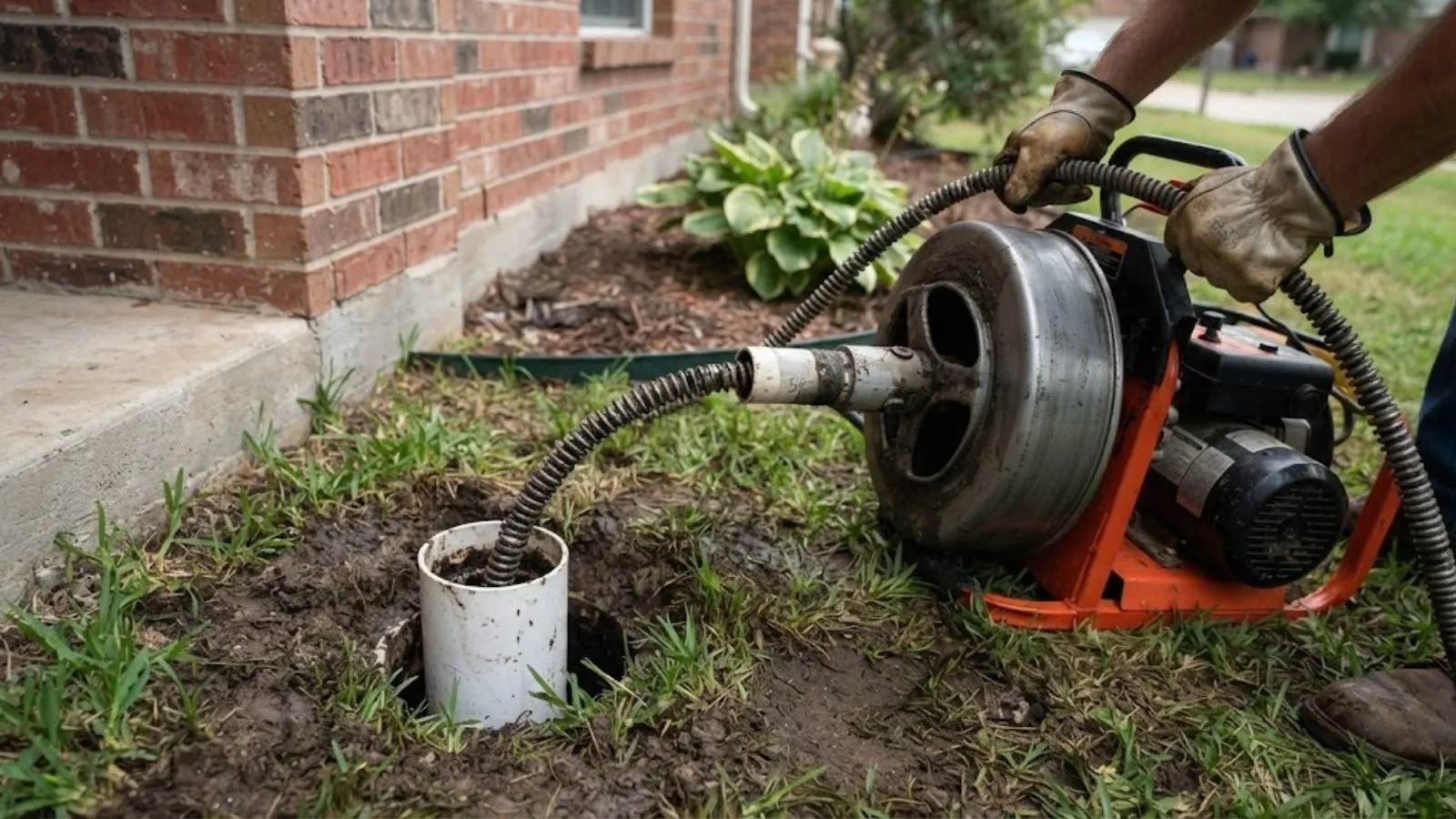
- Find the outdoor cleanout, a capped pipe usually near the foundation. Do not open it yourself if the line is full.
- Photograph the backup for insurance before cleanup starts.
Skip chemical drain openers on a main line clog. They rarely reach it, and they make the job hazardous for the person who has to open the line.
What clogs drain lines in Denton
Tree roots. Denton sits in the Cross Timbers, and mature post oaks, pecans and cedar elms line many older streets. Roots find the joints in clay and cast iron sewer laterals and grow into a mat that catches everything passing through.
Shifting clay. Expansive soil moves a sewer line up and down with the seasons. Over time a section can sag into a low spot, called a belly, where solids settle and build into a clog that keeps coming back.
Grease and wipes. Cooking grease hardens as it cools in the line. So-called flushable wipes do not break down the way toilet paper does. Both are frequent finds in the rental houses around UNT and TWU.
Scale and debris in old pipe. Cast iron drains in older homes corrode on the inside, leaving a rough surface that snags waste.
Cabling, jetting or camera: which one fits the job
The tool should match the blockage. Here is how the choice usually goes.
| Method | Best for | Limits |
|---|---|---|
| Hand auger or small cable. | Single fixtures: sinks, tubs, toilets. | Clears a path but does not scour the pipe walls. |
| Motorized cable machine. | Main line clogs and light root intrusion. | Roots and grease tend to return over months. |
| Hydro jetting. | Heavy grease, sludge and root mats in sound pipe. | Not safe on badly cracked or collapsed pipe. |
| Sewer camera inspection. | Repeat clogs, root checks and pre-purchase inspections. | Shows the problem. It does not clear it. |
When a line clogs again within months, a camera usually shows why. Root mats and grease buildup are the usual targets for hydro jetting. A cracked or sagging section means fixing the pipe itself instead of more cleaning.
Where your responsibility for the line ends
In Denton, as in most Texas cities, the homeowner generally owns the sewer lateral from the house out to the city main. The city maintains the main in the street. A cleanout near the property line is often the dividing point.
That matters when sewage backs up. If neighbors on the same street are also backed up, the city main may be the problem, and the City of Denton wastewater line is the first call. If it is only your house, the blockage is almost always in your lateral.
Knowing this saves money. A plumber can confirm with a camera which side of the line the clog is on before any major work starts.
Neighborhoods where drains clog most
Mature post oaks and pecans shade the older streets west of the Square, and their roots are a common cause of main line clogs in the West Oak Area and Oak-Hickory districts.
Student rentals near UNT and TWU send more grease and wipes down kitchen lines than most homes, which is why scheduled cleaning often makes sense for landlords there.
Drain snaking: when a cable machine is the right tool
Many callers ask for a drain to be snaked. A cable machine, or snake, cuts through hair, grease and soft blockages in sink, tub and main lines. It is fast and it restores flow in most single-fixture clogs.
A snake opens a path through the clog but does not scrub the pipe walls. If the same line clogs again within months, a camera check shows whether roots, a sag or heavy grease buildup is the cause, and hydro jetting may be the better fix.
Kitchen sink clogs and slow kitchen drains
Kitchen drains clog from grease, food scraps and coffee grounds that cool and stick inside the pipe. A double sink that fills on both sides, or water that rises in one side when the dishwasher drains, usually means the blockage is past the trap.
Run hot water only after the drain is moving again, and skip chemical cleaners in a standing sink. The plumber clears the branch line to the main and checks the disposal and dishwasher connections while there.
Clogged shower drain or a slow tub
Slow shower and tub drains are almost always hair and soap buildup near the drain or trap. If the tub also backs up when a toilet flushes, the problem is further down the line and needs a main line clearing.
What affects drain cleaning cost
These are the factors that move the price most.
- Location of the clog. A kitchen trap clears in minutes. A main line clog 60 feet out takes more equipment and time.
- Access. A usable outdoor cleanout keeps costs down. Pulling a toilet to reach the line takes longer.
- Method. Cabling costs less than hydro jetting, but jetting lasts longer on grease and roots.
- Camera work. An inspection adds cost but prevents paying for repeat cleanings on a damaged line.
- Time of the call. Night, weekend and holiday visits usually cost more.
Standard homeowner policies often exclude sewer backups unless a separate backup endorsement was added. It is worth checking your policy before you need it.
Drain cleaning questions from Denton homeowners
The washer pushes a lot of water fast. If the main line is partly blocked, that water pushes air back up through the nearest low drain, which is often a toilet. It is an early sign of a main line clog.
Occasional use in a sink trap will not ruin sound pipe, but they rarely clear a real clog and can damage older cast iron and rubber seals. They also make the line dangerous to open. A plunger or a hand auger is the safer first step.
Only when it needs it. If roots cause a clog every year, scheduled cleaning or a repair of the entry point is cheaper than emergency calls. A camera inspection shows which makes more sense.
Yes. The line is answered 24/7, and main line backups get priority dispatch.
Yes. Rural properties such as homes around Krum are covered too. Homes on septic systems get a different approach, since the tank and field lines are part of the picture.
Yes. Yard and trench drains clog with silt and leaves. They are cleared with a cable or jetter like an indoor drain, and a camera can show whether the pipe has collapsed.